
Table of Contents
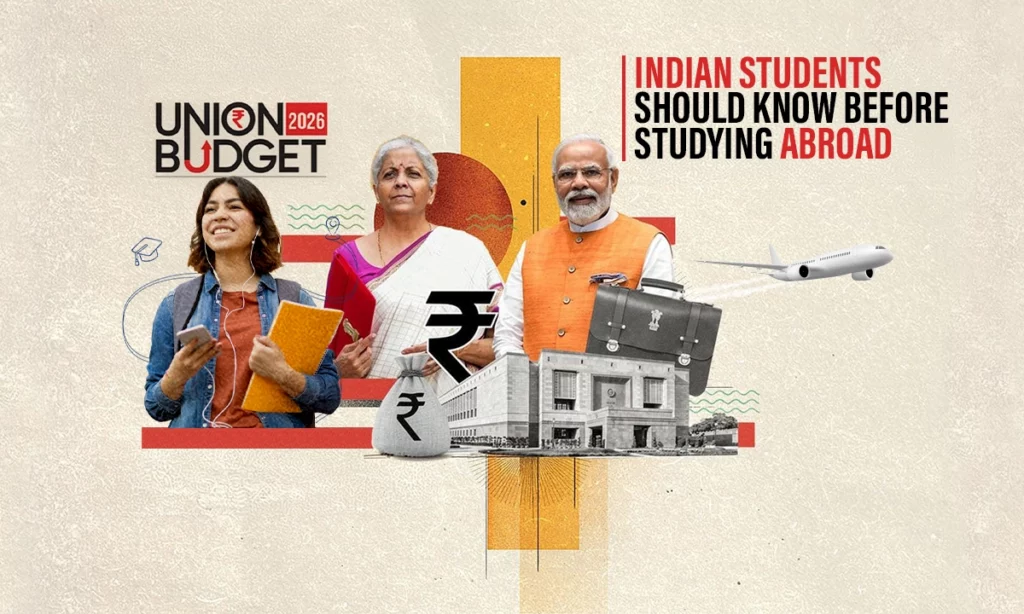
The Union Budget 2026 has made studying abroad even more affordable. All associated taxes have now been reduced for students, and the major changes have been made with regard to the TCS that used to be charged at every major step in the study abroad journey.
Some of the major changes include:
Zero TCS on education loans from recognised financial institutions (Section 80E)
➡️ Removal of earlier 0.5% TCS above ₹7 lakh on loan-funded education
➡️ TCS-free limit for self-funded students increased from ₹7 lakh to ₹10 lakh
➡️ TCS reduced to 2% on amounts above ₹10 lakh (earlier up to 5–20%)
➡️ Lower upfront cost during international university admissions
➡️ Support for NEP 2020 hybrid education models (India to abroad transfer)
➡️ Hybrid pathways can reduce total education cost by 20–40%
Students must note that these changes are applicable from FY 2026–27 onwards, and students can avail themselves of these benefits starting from April 1, 2026.
Why is it important for Indian students?
The Union Budget was presented by the Hon. Finance Minister of India, Smt. Nirmala Sitharaman, on February 1, 2026, provided great relief to students who wish to pursue education abroad. Overall, students can expect to save at least ₹5,00,000 to ₹10,00,000 while paying for their education abroad.
Students who are planning to fund their education through education loans can also expect the interest rates to be reduced further.
How does University Living Help Students Studying Abroad?
University Living helps students get accommodation abroad at affordable costs. Getting a place to stay abroad is a big hassle, and students generally face a lot of problems along with the extra financial burden apart from the tuition fees; therefore, the Union Budget 2026 also helps students save on accommodation costs. Click here to find your perfect home away from home only at University Living!