
Table of Contents
Living in the UK is exciting, but daily expenses often catch students off guard. While tuition fees are fixed, the cost of living in UK can vary a lot based on the city, lifestyle and accommodation choices. From rent and groceries to transport and healthcare, these costs shape your student experience. Understanding them early helps you in managing your budget better. Let’s get this started!
Why Understanding the Cost of Living in UK Matters for Students?
When you are planning your stay in the UK, understanding your daily expenses is very important. Your tuition fees is fixed, but when it comes to living costs, they are not. That is why most of the students feel the pinch.
Realistic expectations for first-time international students
It is important to know that cost of living in UK varies a lot according to the city. For example, most of the students we have spoken to have said that the cost of living in London is higher than in small cities. The reason for the same is rent and transport.
Helps plan budgets ahead
Knowing your monthly expenses in the UK will help you plan smarter. When students understand finances in advance, it helps them in choosing the right student accommodation in UK. This is especially true in the case of London, as here budgets need extra breathing room.
Meets UKVI financial proof guidelines
UKVI requires students to come up with financial proof according to where they are going to live. London and non-London requirements also differ a lot. That is why once you understand the real costs, it will help you avoid visa delays and rejections.
Average Cost of Living in UK for International Students (2026)
One must always have a clear picture of how much they are going to be spending on both, monthly and annual basis. So, when it comes to the cost of living in the UK, it is not just about a single number. It varies according to city, accommodation style, and lifestyle.
Monthly Average Cost
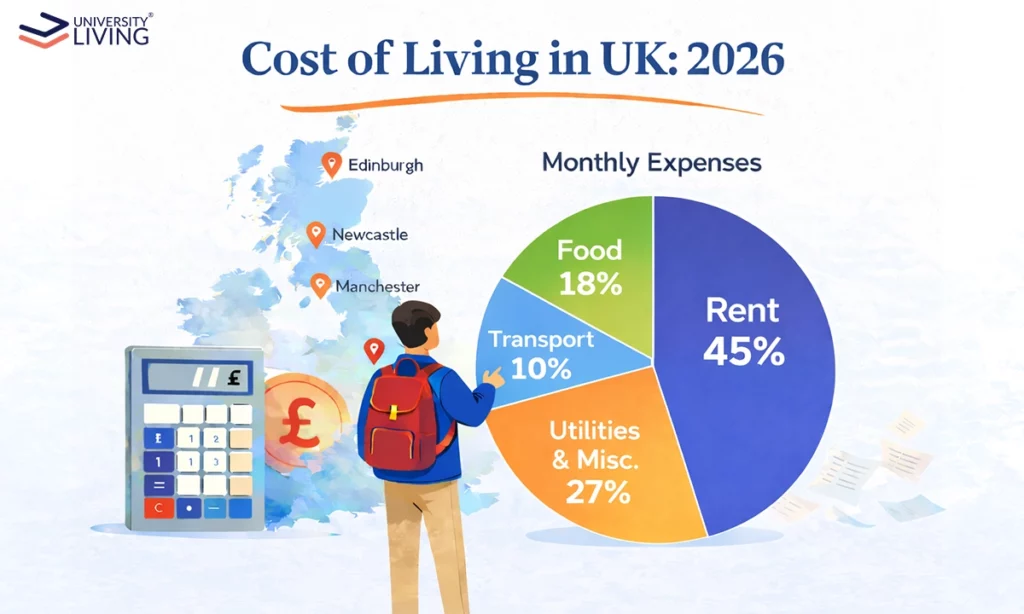
British Council suggest that international students should roughly keep a budget of £900-£1,400/-month for daily expenses. This will usually include things like:
- Rent
- Groceries and bills
- Transport and social expenses
- Utilities and personal expenses
And if you are living in London, this figure is going to increase a lot because of the rent and transport. There are some surveys that state the monthly living cost of around £1,142+.
Annual Cost Estimate
If you add everything up for an entire academic year, your rough total is going to cross the range of £10,800-£16,800+. Though it is dependent on where you are going to live and how much you will spend:
- In cities that are outside London, the cost is going to remain on the lower end.
- But when it comes to London, the numbers are going to climb up.
- And when it comes to types of student accommodation in UK, private rooms are going to cost around £800-£1,200/month.
UKVI Financial Requirement (Outside London & London)
To clear up your visa application with UK Visas and Immigration, you have to prove that you can support yourself. The living cost here is dependent on where you are going to study:
- Outside London: £1,171/ month
- Inside London: £1,529/month
This is only for a 9-month course. These figures act as a safety net. They are ever-changing, it is best to keep an eye on official resources.
Accommodation Costs in UK
When it comes to living in the UK as a student, accommodation takes the biggest chunk of your budget, especially if you are looking for student housing in London. Just know that the prices can vary based on location, time of booking and room type.
On-Campus Housing Costs
Living in an on-campus university hall is very predictable and convenient, especially for first-year students. The weekly costs for halls typically range from £120 to £250. This can become around £520 – £1,080/month based on university, room type, and included bills. In some unis like the University of Sussex, a single room with shared or private bathroom can cost around £123- £215/week with bills included.
Private Student Accommodation Costs
When it comes to private options, they give you more flexibility. It includes accommodations like shared apartments, studios or PG/private rentals. They usually offer more independence:
- Shared apartments/flats: £300 – £800/month
- Private studios: £480 – £1,200/month
- Private student halls: £150 – £350/week
One thing you should be aware of is that prices in London can be 30-50% higher than in most UK cities. On the other hand, shared flats are considered to be the budget-friendly pick, especially where rents are gentler on wallets.
London vs Other UK Cities
Wherever you choose to live, just know that it has the ability to make a noticeable difference in your budget. The cost of living in London is higher mainly because of rent and transport. There are many other UK cities that offer more affordable options for students. Below is the comparison table that helps you see how accommodation costs can line up:
| Accommodation Type | London (Approx.) | Other UK Cities (Approx.) |
| University Halls (weekly) | £212/week (£920/month) | £166/week (£720/month) |
| Private Studios (weekly) | £259/week (£1,130/month) | £155/week (£680/month) |
| Shared / Private Rent (monthly) | £700 – £1,200+ | £400 – £800 |
Note: Prices are subject to change, based on location, time of booking and room type.
Food & Grocery Expenses
When you are budgeting for living expenses in the UK, food and groceries play an important part in the mix. They might not jump like rent, but they add up fast if you do not keep track of them.
Monthly Grocery Budget
Most of the students that we have spoken to say that they end up spending around £150-£250/month on groceries if they are cooking at home. This covers basics like bread, milk, eggs, pasta, and the occasional coffee. There are many shops like Aldi, Lidl or Asda that provide discounts which help in keeping your overall cost down.
Eating Out Costs
Eating out in the UK can vary a lot:
- A takeaway or budget meal: £10- £15
- A casual pub meal: £15-£25+
- Coffee or snacks: £3 -£5+
Transportation Costs
Travelling in public transport is a part of everyday life when living in the UK. And there are many students who state that travel costs can go up if you don’t know cheaper ways to move around.
Local Bus, Train and Underground Costs
In various UK cities, costs can vary according to the mode of transport. Buses are usually considered the cheapest, while trains and underground services are pricey.
- In London, for example, an Oyster Card or contactless payment generally caps your daily charges.
- It is much lower than buying a paper ticket. Students can also use various transport apps in the UK to get around.
- Apart from that, buses and trams are also considered one of the most cost-effective ways to commute.
Student Discount Cards
If you are a student who is under 25, you can easily access official travel discounts that reduce transport costs significantly:
- 16-25 Railcard: It costs around £35 and gives roughly 1/3 off on most UK rail fares on National Rail services. There are many full-time students who are aged 26+, who can qualify this based on proof of study.
- 18+ Student Oyster Photocard: It is available in London for full-time students who are aged 18+. This offers about 30% off the adult rate Travelcards and bus/tram passes.
Together, these cards make your travel cheaper than standard adult fares. They help you save money on daily commutes and weekend trips.
Healthcare & Insurance
Healthcare for international students in the UK is covered by the National Health Service (NHS). And if you have been studying here for more than six months, then paying the Immigration Health Surcharge is important. It gives you access to NHS services during your stay.
NHS Health Surcharge
Generally, international students in the UK pay £776/year as part of the UK student visa application. Once you have completed your payments, you can easily use services like GP visits, hospital treatment and emergency care at no extra costs. There are some services like prescriptions, dental and eye care that usually involve additional charges.
Private Health Insurance Overview
Private Health insurance is not required if you have paid the IHS. That said, there are some students who opt for it to get faster specialist appointments or extra dental and optical cover. It is optional and works as a top-up, not a replacement.
Expected Medical Costs
Most of your routine healthcare is covered, but you should still budget for prescription fees and dental or optical treatments when needed.
London vs Other Cities: Where is Living Cheaper?
One of the biggest decisions you have to take as a student living in London is where you are going to live. While London is exciting, iconic and full of opportunities, it comes with a high price tag. As for the other UK cities like Manchester, Birmingham, Leeds and Glasgow, they offer more affordable lifestyle. Though prices can vary based on location, time of booking and individual choices.
| City | Avg. Monthly Living Cost (GBP) |
| London | £1,400 – £1,700 |
| Manchester | £950 – £1,250 |
| Birmingham | £900 – £1,200 |
| Glasgow | £850 – £1,100 |
| Leeds | £850 – £1,050 |
| Sheffield | £800 – £1,050 |
Part-Time Work Opportunities to Manage Expenses
For many international students, part-time work opportunities are a practical way to manage the cost of living in UK. Though the UK allows students to work legally, it all comes with clear limits:
- Working hours allowed: According to UKVI guidelines, international students can work around 20 hours per week during term time and full-time during scheduled holidays. Working beyond this time is not permitted and can impact your visa status.
- Average student salary: Most of the student jobs get paid between £10 and £12/hour. It is entirely dependent on the role and the city.
- Types of student jobs: Some of the common job options include retail, cafes, restaurants, libraries and tutoring. On-campus jobs are considered more popular as they are more flexible than others.
- Realistic earning expectations: Realistically, a student can earn around £400-£800/month during term time. This amount can help you in covering groceries, transport or small personal expenses. But overall, it is considered a supporting incoming, not a replacement.
Smart Money Saving Tips for Students
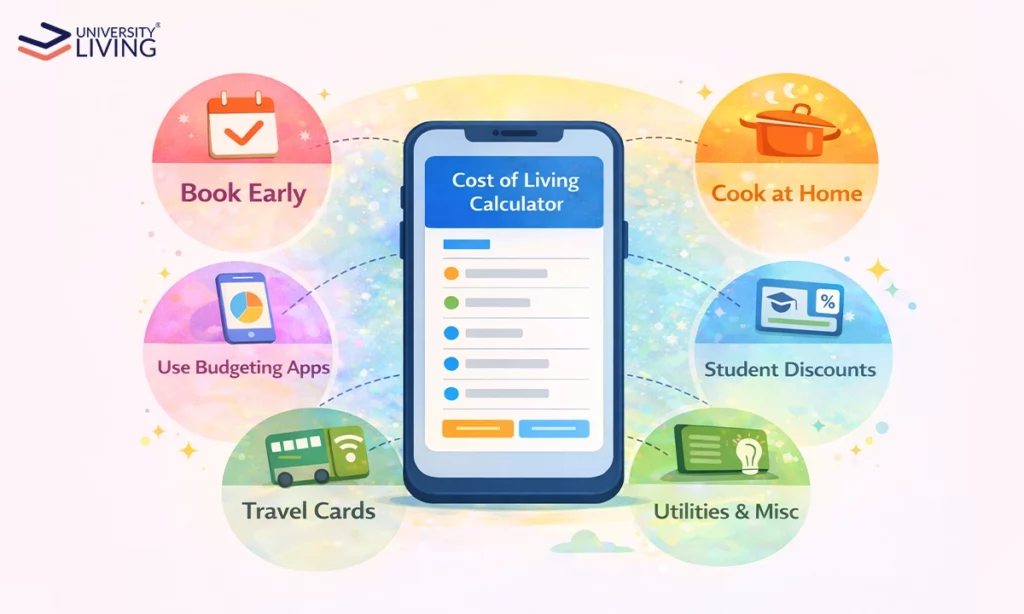
Managing your money as a student living in the UK is not about cutting all the fun. But it is all about being smarter with your choices. Small habits genuinely make a big difference over time.
- Accommodation hacks: When students book early, it allows them to get better rent deals, especially for students in the UK. However, shared apartments or ensuite rooms that are outside the city are often cheaper than studios.
- Food savings: Cooking at home acts as a real game-changer. Shopping at stores like Aldi, Lidl, or Asda, and meal prepping with flatmates can easily help you cut down grocery bills.
- Transport savings: Buses are always considered cheaper than trains. But when you use travel passes, off-peak tickets and student discounts, it can keep your monthly expenses far more manageable in the UK.
- Student discounts: There are many platforms like UNiDAYS, Student Beans, and TOTUM that offer discounts on food, fashion, tech, and even travel.
- Budget management tools: Money management apps like Monzo, Revolut, or Splitwise help you in keeping track of spending and splitting bills. This makes budgeting feel less chaotic and very realistic.
Conclusion
Managing your cost of living in UK is very easy when you plan ahead. London offers big opportunities but higher expenses. There are many UK cities that are budget-friendly. By understanding accommodation costs, daily spending, visa requirements and part-time work options, students can make informed decisions. Smart budgeting tips, student discounts and early planning go a long way in making your stay in the UK both affordable and enjoyable.
Frequently Asked Questions
What is the average cost of living in UK for students in 2026?
Most of the international student’s budget around £900-£1,400/month for their everyday expenses according to the city and lifestyle.
How much money do I need for a UK student visa?
One will need around £1,171/month outside in London or £1,529/month in London as a financial proof.
Is London considered more expensive than other UK cities?
Yes, London’s living expenses are higher than other cities especially rent and transport.
Can International students survive on part-time job income?
Part-time work opportunities help you with daily expenses. But it won’t usually cover all costs. So, you must budget and save for the same.
What is the cheapest city in UK for international students?
Cities like Sheffield, Glasgow, and Leeds are often said to be the most affordable for students.